
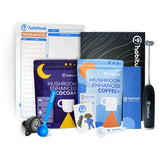


The best sleep routine is the one you do not have to talk yourself into. That is really the whole argument for making your evening cocoa taste good. A nightly habit lives or dies on whether you look forward to it, so here are three ways to make mushroom cocoa that are worth getting off the couch for: a classic creamy cup, a dairy-free version, and a frothy nightcap latte.
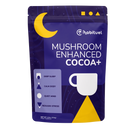
All three use Enhanced Mushroom Cocoa +, which means all three land at 0 g of sugar with no added caffeine and no melatonin.
Start With the Base Method
Get this part right and every variation below works. Get it wrong and you end up with the grainy cup that gives cocoa powder a bad name.
- One scoop, 8 to 10 oz of liquid. Less liquid gives you a richer, more dessert-like cup. More gives you something you can sip slowly, which is usually what you want at night.
- Heat to steaming, not boiling. Somewhere around 160 to 170°F. Boiling scorches cocoa and turns the texture chalky, and there is no upside to it.
- Make a paste first. This is the step everyone skips. Add a splash of the hot liquid to the powder and stir it into a smooth paste, then pour in the rest. It is the difference between silky and lumpy.
- Whisk, do not stir. Twenty seconds with a small whisk or a handheld frother, and the texture changes completely.
Recipe 1: The Classic Creamy
The default, and the one most people settle on.
- 1 scoop Enhanced Mushroom Cocoa +
- 8 oz whole milk, heated to steaming
- A pinch of flaky salt
Make the paste, add the rest of the milk, whisk hard for 20 seconds. The salt is not optional as far as we are concerned. A small pinch sharpens the chocolate and makes an unsweetened cocoa taste noticeably rounder. Whole milk gives the most body, but 2% works fine.

Recipe 2: The Dairy-Free (Oat Milk Is the Winner)
If dairy sits heavily on you late in the evening, this is the version to make. We tested the obvious options and oat milk is the clear pick.
- 1 scoop Enhanced Mushroom Cocoa +
- 8 oz barista-style oat milk, heated to steaming
- 1/4 tsp vanilla extract
- A pinch of salt
Barista-blend oat milk matters here. It has a higher fat content and added stabilizers, which is why it foams instead of splitting. Standard oat milk works but comes out thinner. Almond milk is the weakest option for this, since it is low in fat and leaves the cup watery. Coconut milk is rich and pleasant if you want the coconut note, which not everyone does.
Recipe 3: The Frothy Nightcap Latte
For when you want the cup to feel like an occasion rather than a routine.
- 1 scoop Enhanced Mushroom Cocoa +
- 6 oz milk of choice, heated
- 2 oz milk, frothed separately for the top
- 1/4 tsp cinnamon, or a few drops of vanilla
- A pinch of salt
Build the base with the 6 oz, whisking to a smooth paste first as always. Froth the remaining 2 oz separately with a handheld frother or by shaking it hard in a sealed jar, then spoon the foam on top. Dust with a little extra cinnamon. A blender also works and produces a lighter, almost mousse-like texture, though it is more to wash at 9pm.

Small Things That Make a Real Difference
- Do not boil it. Worth repeating, because it is the single most common mistake.
- Salt before sweetener. Most people reaching for sweetener actually want contrast, and a pinch of salt delivers that without the sugar.
- If you do sweeten, go small. The cocoa is already 0 g of sugar, so a half teaspoon of maple syrup or a few drops of monk fruit keeps it that way in spirit. A late blood sugar swing is not what you want at bedtime.
- Warm the mug. Rinse it with hot water first. It keeps the drink at temperature for the full 20 minutes you will actually take to drink it.
- Preground spices are fine. Cinnamon, a pinch of cardamom, or a single crushed clove all work. Anything more elaborate and you will stop bothering by Thursday.
When to Drink It
About 30 to 60 minutes before you want to be asleep. There is a practical reason for the timing beyond the ritual: a meta-analysis of before-bed passive body heating found that warming the body 1 to 2 hours before bedtime was associated with better self-rated sleep quality and shorter time to fall asleep, by helping core body temperature drop afterward [1]. A warm mug is a small version of the same idea.
Make it the last thing you consume, dim the lights while you drink it, and keep the timing roughly consistent. The cup is a cue, and cues work by repetition.
The Bottom Line
Paste first, never boil, always a pinch of salt. That is 90% of a great cup. Whether you go classic, oat milk, or frothed, the version you will keep making is the right one.
Shop Enhanced Mushroom Cocoa +
If you are new to it, start with why a warm bedtime drink helps at all. On the coffee side, we have a sugar-free mushroom coffee latte for mornings.
Frequently Asked Questions:
How do you make mushroom cocoa?
Heat 8 to 10 oz of milk or water to steaming, not boiling. Stir a splash into one scoop of cocoa to make a smooth paste, add the rest, and whisk for 20 seconds. A pinch of salt improves the flavor considerably.
What milk is best for mushroom cocoa?
Whole milk gives the richest body. For dairy-free, barista-style oat milk is the best performer because its higher fat content foams rather than splitting. Almond milk tends to come out thin.
Can I make mushroom cocoa dairy-free?
Yes. Barista oat milk is the top choice, with coconut milk as a richer alternative if you like the coconut note. The recipe method is identical.
When should I drink mushroom cocoa?
Roughly 30 to 60 minutes before bed. Research on before-bed warming suggests the effect is strongest 1 to 2 hours ahead of bedtime [1].
Does mushroom cocoa have sugar or caffeine?
Enhanced Mushroom Cocoa + has 0 g of sugar and no added caffeine. Cocoa naturally contains a trace amount of caffeine, far less than a cup of coffee. It is also completely melatonin-free.
References
- Haghayegh S, Khoshnevis S, Smolensky MH, Diller KR, Castriotta RJ. Before-bedtime passive body heating by warm shower or bath to improve sleep: A systematic review and meta-analysis. Sleep Med Rev. 2019;46:124-135. doi:10.1016/j.smrv.2019.04.008
These statements have not been evaluated by the Food and Drug Administration. This product is not intended to diagnose, treat, cure, or prevent any disease.