
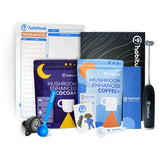
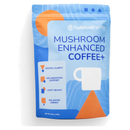


If you have just switched to functional coffee, one question comes up fast: how much mushroom coffee per day is the right amount? The short answer for most people is one to two servings a day, enough to get a functional dose of mushrooms and a gentle lift of caffeine without overdoing it. Below is exactly how to think about your daily amount, when to drink it, and how long it takes before you notice a difference.
The Short Answer: 1 to 2 Cups a Day
For most healthy adults, one to two servings of mushroom coffee per day is the sweet spot. One serving delivers a full functional dose of mushrooms, and a second cup is fine if you want more of a coffee ritual or an afternoon pick-me-up. There is no need to drink four or five cups to get more benefits. With a properly dosed blend, a single serving already does the heavy lifting.
Why One Serving Is Usually Enough
The reason comes down to dosage. Functional mushrooms only work when you get a meaningful amount of them. In the clinical research on Lion's Mane, for example, participants with mild cognitive impairment took 3,000 mg of Lion's Mane per day for 16 weeks and saw measurable improvements in cognitive scores, benefits that faded after they stopped [1]. That tells us two things: the dose has to be real, and consistency matters more than volume.
A single serving of Habituel already contains 3,750 mg of functional mushrooms (Lion's Mane, Chaga, and Turkey Tail), 150 mg of L-theanine, and 4,000 mg of collagen. So one cup gives you the kind of amount studied for real effects. Piling on extra cups mostly just adds caffeine, not proportionally more benefit. If you want to understand why the amount on the label matters so much, we break it down in our guide on why most mushroom coffee is under-dosed.
How Much Caffeine Are You Actually Getting?
Caffeine is the main reason not to go overboard on any coffee. A standard cup of regular coffee has roughly 95 mg of caffeine, and the U.S. Food and Drug Administration considers up to 400 mg per day safe for most healthy adults [2].
Habituel contains just 35 mg of caffeine per serving, about a third of a regular cup. The math is reassuring:

Put another way: you would need roughly 4 cups of regular coffee, or about 11 servings of Habituel, to reach that 400 mg daily limit.
In other words, one or two servings of mushroom coffee keeps you comfortably within a calm, low-caffeine range, which is exactly the point of pairing low-dose caffeine with L-theanine for steady energy instead of jitters.
When Should You Drink It?
Morning is the natural home for mushroom coffee. It slots right into the habit you already have. Because each serving is low in caffeine, many people also enjoy a second cup in the early afternoon without it affecting sleep the way a full-strength coffee might. A simple rule of thumb: if regular coffee after 2 or 3 p.m. keeps you up, a 35 mg cup is far less likely to, but still give yourself a buffer before bed.

How Long Until You Feel a Difference?
There are two timelines to keep in mind:
- Right away: The caffeine and L-theanine combination is felt within the first hour, and research shows this pairing improves alertness and focus without the crash of straight caffeine [3].
- Over a few weeks: The cognitive and wellness benefits associated with functional mushrooms build up with daily use. In the Lion's Mane trial, effects were measured after weeks of consistent intake, not a single dose [1]. This is why drinking one serving every day beats drinking three cups once in a while.
Can You Drink Too Much?
You would have to drink a lot of mushroom coffee to run into a caffeine problem, but a few sensible limits still apply. Stay under the 400 mg daily caffeine guideline across all sources [2], and remember that other drinks and supplements add up. If you are pregnant, breastfeeding, sensitive to caffeine, or taking medication, it is worth checking with your doctor before making any supplement a daily habit. As with most functional foods, consistency at a sensible dose beats loading up.
The Bottom Line
For most people, one to two servings of mushroom coffee per day is the ideal amount. It delivers a full, research-based dose of functional mushrooms, keeps caffeine gentle, and fits neatly into your morning. The key is a blend that actually contains a functional amount in the first place, because otherwise no number of cups will help. Habituel is built around that standard, with 3,750 mg of mushrooms, 150 mg of L-theanine, and 4,000 mg of collagen in every scoop.
Start your daily habit with Habituel mushroom coffee.
Frequently Asked Questions
How much mushroom coffee should I drink per day?
For most healthy adults, one to two servings per day is ideal. A single serving of a properly dosed blend already provides a functional amount of mushrooms, so there is no need to drink more than two cups.
Can I drink mushroom coffee every day?
Yes. Mushroom coffee is designed for daily use, and the benefits associated with functional mushrooms tend to build with consistent daily intake rather than occasional large amounts [1].
How much caffeine is in mushroom coffee?
It varies by brand. Habituel contains 35 mg per serving, about one-third of a regular cup of coffee, which keeps you well within the FDA's 400 mg daily guideline for healthy adults [2].
How long does it take for mushroom coffee to work?
You feel the calm, focused energy from caffeine and L-theanine within an hour [3], while the wellness benefits associated with functional mushrooms build up over several weeks of daily use [1].
Is it bad to drink mushroom coffee on an empty stomach?
Most people tolerate it well, and its lower caffeine content makes it gentler than regular coffee. If you are prone to stomach sensitivity, try it with breakfast.
References
- Mori K, Inatomi S, Ouchi K, Azumi Y, Tuchida T. Improving effects of the mushroom Yamabushitake (Hericium erinaceus) on mild cognitive impairment: a double-blind placebo-controlled clinical trial. Phytother Res. 2009;23(3):367-372. PubMed
- U.S. Food and Drug Administration. Spilling the Beans: How Much Caffeine is Too Much? FDA.gov
- Giesbrecht T, Rycroft JA, Rowson MJ, De Bruin EA. The combination of L-theanine and caffeine improves cognitive performance and increases subjective alertness. Nutr Neurosci. 2010;13(6):283-290. PubMed
These statements have not been evaluated by the Food and Drug Administration. This product is not intended to diagnose, treat, cure, or prevent any disease.