
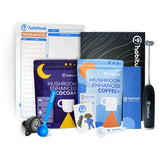
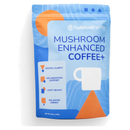
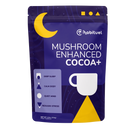


Long before periods stop for good, many women notice their bodies changing: restless sleep, a shorter fuse, brain fog that shows up in the middle of a sentence. That stretch is perimenopause, the transition years leading up to menopause, and it often starts in your early to mid 40s. If you are looking for a gentler morning routine during this season, mushroom coffee for perimenopause is worth understanding, because the very thing many women lean on to cope, a strong cup of coffee, can quietly make some symptoms worse.
What's Actually Happening During Perimenopause
Perimenopause is driven by fluctuating, rather than simply declining, hormones. Estrogen and progesterone rise and fall unpredictably, and those swings ripple into sleep, mood, memory, and energy [1]. It is completely normal to feel sharp one week and foggy the next. Understanding that the ground is genuinely shifting, not that you are imagining it, is the first step toward supporting your body through it.
Why Your Regular Coffee Might Be Working Against You
Caffeine is a double-edged sword in perimenopause. It gives you a quick lift, but research on midlife women has linked caffeine intake to more bothersome vasomotor symptoms such as hot flashes and night sweats [2]. High caffeine can also amplify anxiety and disrupt already-fragile sleep, two things many women in this stage are actively trying to protect.
That does not mean you have to give up your morning cup. It means the amount of caffeine matters. A standard coffee carries about 95 mg per cup; a serving of Habituel mushroom coffee has just 35 mg, roughly a third, so you keep the ritual and the gentle lift while dialing down the input that can aggravate symptoms.
How Mushroom Coffee Fits This Stage of Life
Mushroom coffee pairs Arabica coffee with functional mushrooms and calming compounds, which lines up well with what perimenopausal bodies are asking for: steady energy, less overstimulation, and daily nutritional support. Here is how the key ingredients map to common perimenopause complaints.

Lion's Mane for Brain Fog
The forgetfulness and mental haze of perimenopause are among the most frustrating symptoms. Lion's Mane has been studied for cognitive support: in a double-blind, placebo-controlled trial, adults taking 3,000 mg of Lion's Mane daily for 16 weeks showed improved cognitive scores compared with placebo [3]. It is not a cure, but as a daily habit it is a research-backed way to support focus and clarity.
L-Theanine for Mood and Stress
Mood swings and a frayed stress response are hallmarks of the transition. L-theanine, an amino acid found in tea, has been shown to reduce psychological and physiological stress responses at a 200 mg dose [4], and when paired with caffeine it promotes calm, focused alertness rather than a jittery high [5]. Habituel includes 150 mg of L-theanine per serving to smooth out the caffeine.
Collagen for Skin and Joints
As estrogen declines, so does the body's own collagen, which is part of why skin can feel less elastic and joints stiffer during this stage. In a double-blind, placebo-controlled study, women aged 35 to 55 who took specific collagen peptides daily for eight weeks saw significant improvements in skin elasticity [6]. Each serving of Habituel provides 4,000 mg of collagen peptides, making it easy to support skin and joints through a habit you already have.
Chaga for Everyday Antioxidant Support
Chaga is rich in antioxidants and is traditionally valued for supporting immunity and helping the body manage everyday oxidative stress. It rounds out the blend as gentle, daily nutritional support rather than a targeted treatment.
How to Add It to Your Routine
The simplest approach is a straight swap: replace your first cup of regular coffee with mushroom coffee, or alternate them if you are not ready to give up your usual brew entirely. Because the benefits associated with functional mushrooms build with consistency [3], a daily cup will do more for you than an occasional one. Give it a few weeks before judging the effect on your focus and steadiness.

A Gentler Morning Habit
Perimenopause is a season of change, and small, sustainable habits tend to serve women better than dramatic overhauls. Swapping a high-caffeine coffee for a lower-caffeine, nutrient-supported cup is exactly that kind of habit: familiar, easy to keep, and aligned with what your body needs right now. For a closer look at specific symptoms, see our guides on mushroom coffee vs. regular coffee for menopause and mushroom coffee for menopause brain fog.
Try Habituel mushroom coffee and give your mornings a gentler start.
Frequently Asked Questions
Is mushroom coffee good for perimenopause?
It can be a helpful swap. Its lower caffeine content is less likely to aggravate symptoms like hot flashes and disrupted sleep [2], while ingredients such as Lion's Mane, L-theanine, and collagen offer research-backed support for focus, stress, and skin [3][4][6].
Will mushroom coffee help with perimenopause brain fog?
Lion's Mane has been studied for cognitive support, with improved cognitive scores in a controlled trial after daily use [3]. As a consistent daily habit it may help support focus and mental clarity.
Does mushroom coffee have caffeine?
Yes, but much less than regular coffee. Habituel contains 35 mg per serving versus roughly 95 mg in a standard cup, which can be gentler during perimenopause.
Can I drink it every day during perimenopause?
Yes. It is designed for daily use, and the mushroom-related benefits build with consistency [3]. If you take medication or have health concerns, check with your doctor first.
When should I drink mushroom coffee?
Morning works best, slotting into your existing coffee habit. Its low caffeine also makes an early-afternoon cup less likely to interfere with sleep than regular coffee.
References
- Santoro N. Perimenopause: From Research to Practice. J Womens Health (Larchmt). 2016;25(4):332-339. PubMed
- Faubion SS, Sood R, Thielen JM, Shuster LT. Caffeine and menopausal symptoms: what is the association? Menopause. 2015;22(2):155-158. PubMed
- Mori K, Inatomi S, Ouchi K, Azumi Y, Tuchida T. Improving effects of the mushroom Yamabushitake (Hericium erinaceus) on mild cognitive impairment: a double-blind placebo-controlled clinical trial. Phytother Res. 2009;23(3):367-372. PubMed
- Kimura K, Ozeki M, Juneja LR, Ohira H. L-theanine reduces psychological and physiological stress responses. Biol Psychol. 2007;74(1):39-45. PubMed
- Giesbrecht T, Rycroft JA, Rowson MJ, De Bruin EA. The combination of L-theanine and caffeine improves cognitive performance and increases subjective alertness. Nutr Neurosci. 2010;13(6):283-290. PubMed
- Proksch E, Segger D, Degwert J, Schunck M, Zague V, Oesser S. Oral supplementation of specific collagen peptides has beneficial effects on human skin physiology: a double-blind, placebo-controlled study. Skin Pharmacol Physiol. 2014;27(1):47-55. PubMed
These statements have not been evaluated by the Food and Drug Administration. This product is not intended to diagnose, treat, cure, or prevent any disease.