

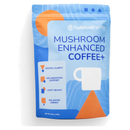


Chaga (Inonotus obliquus) is a fungus that grows primarily on birch trees in cold climates throughout the northern hemisphere[8]. These woody growths, often called clinkers or conks, have a dark, almost charred appearance on the outside, but conceal a surprising bright orange interior[1].
For centuries Chaga has been used in traditional medicine, particularly in Northern Europe and Russia[6]. During the Second World War it was used as a coffee substitute across Scandinavia, valued for a steady, sustained energy release without the jitters of coffee. Habituel includes Chaga extract in Mushroom Enhanced Coffee+.
1 Description and habitat
What is harvested as Chaga is not a conventional mushroom but a sclerotium: a dense mass of fungal tissue the organism forms as it grows inside a living birch. The exterior is black and deeply cracked, closer in appearance to burnt wood than to a fungus, while the interior is a bright rust orange[1]. It grows slowly over years in cold northern forests across Russia, Scandinavia, Canada and the northern United States[8]. Because it draws compounds from the birch itself, including betulin and betulinic acid, the host tree matters to the final composition.
2 Traditional use
Chaga occupies a central place in the folk medicine of Northern Europe, Siberia and Russia, where it was prepared as a long-simmered tea and taken as a daily tonic rather than an acute remedy[6]. Its best-known modern chapter is wartime: across Scandinavia during the Second World War, Chaga was roasted and brewed as a coffee substitute when imports stopped, prized for a steady lift without the sharp edge of caffeine. That history is part of why it belongs in a coffee rather than a capsule.
3 Research
Chaga is one of the more heavily studied functional mushrooms, with a literature spanning immunology, inflammation and antioxidant chemistry[6][10]. The sections below set out what each body of work established, with every source cited and linked.
3.1 Immune signalling
Chaga extracts increase the production of white blood cells, which are central to the body's defence against infection[4][6]. Chaga also influences the production of cytokines, the immune messengers that regulate how strongly and how appropriately the immune system responds[5][6]. This is modulation rather than blunt stimulation, which is consistent with its traditional use as a long-term tonic instead of a short course. Laboratory work supports that description directly: in cultured macrophages, Chaga extract dampened cells that had already been switched into an inflammatory state while leaving resting cells largely alone[15]. That is a bidirectional effect rather than a one-way push, shown in cell culture.
3.2 Inflammation
Chronic inflammation is linked to a wide range of health issues. Chaga carries anti-inflammatory activity attributed to its content of phenols and polysaccharides, compounds that help reduce inflammation in the body[1]. The polyphenol density is among the highest measured in any edible fungus, which is the main reason Chaga is described as an antioxidant ingredient rather than a stimulant one. The mechanism has a name. Chaga's phenolics block NF-kappaB, the signalling pathway that switches inflammation on: an oral extract cut both the inflammatory and the pain response in rodents while blocking NF-kappaB in cultured macrophages[11], and newer work on three isolated polyphenols reports the same downregulation of the TLR4/MyD88/NF-kappaB route alongside antioxidant activity[14].
3.3 Steady energy without the jitters
Chaga provides a caffeine-like lift without the jitters commonly associated with coffee. Its wartime use as a Scandinavian coffee substitute rested on exactly this property: a steady and sustained energy release rather than a spike. That steadiness supports focus and mental clarity, and it is why Chaga pairs well with a lower-caffeine cup rather than competing with it. In animal studies, mice given Chaga extract for six weeks ran three to four times longer before exhaustion on a treadmill, with higher fat oxidation during exercise[13].
3.4 Other areas under study
Chaga has also been examined in relation to insulin sensitivity and metabolic markers[2][3][12], blood lipids[7], and cell behaviour in laboratory models[9][16][17]. The lipid work is specific: in mice fed a high-fat diet, an Inonotus obliquus polysaccharide lowered total cholesterol by around 40 per cent, triglycerides by 25 per cent and LDL by 30 per cent while raising HDL[7]. A 2023 review pulls the anti-inflammatory, antioxidant, anti-diabetic and anti-fatigue strands together in one place[10]. Each of these areas has its own published literature, linked in full in the references section below.
4 Strength of the evidence
Not all evidence carries the same weight. This is what the research behind Chaga rests on.
- Chaga has one of the largest published literatures of any functional mushroom, spanning immunology, phytochemistry and metabolic research.
- Its polyphenol content has been measured directly and repeatedly, so the antioxidant claim rests on chemistry rather than inference.
- The immune findings converge from independent research groups working on the same polysaccharide fractions.
- Centuries of documented use in Northern Europe and Russia give the modern work a long safety record to build on.
5 Safety and interactions
Chaga is generally considered safe for healthy adults in moderate amounts, but a few considerations apply.
6 Sourcing, extraction and quality
The quality and potency of Chaga vary considerably with the source, because the fungus absorbs compounds from its host tree and from its environment over years of slow growth. The terms below are the ones worth checking on any label.
7 Use in Habituel formulas
Habituel uses Chaga extract in Mushroom Enhanced Coffee+, alongside Lion's Mane, Turkey Tail, L-Theanine, collagen peptides and Arabica coffee. It is included at the level used in the research described above rather than a token amount added for the label. Exact quantities per serving are proprietary. Every ingredient is listed separately, so there is no proprietary blend hiding the ratio.
8 References
Last reviewed August 2026 · 17 references cited. This article is for information only. These statements have not been evaluated by the Food and Drug Administration. This product is not intended to diagnose, treat, cure, or prevent any disease.
9 See also
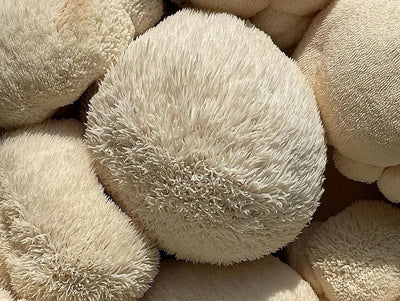 Lion's Mane
Focus and memory
Lion's Mane
Focus and memory
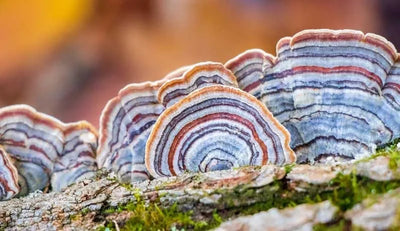 Turkey Tail
Immune and gut support
Turkey Tail
Immune and gut support
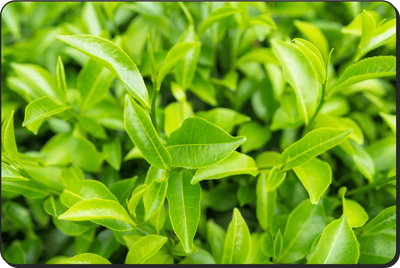 L-Theanine
Calm focus
L-Theanine
Calm focus
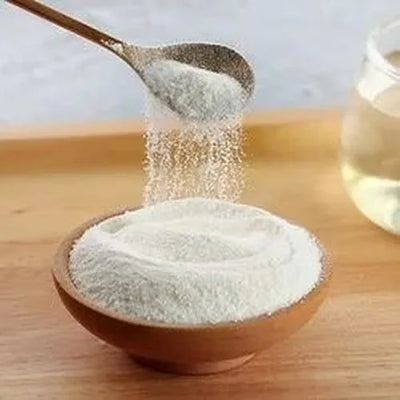 Collagen Peptides
Joints, skin, recovery
Collagen Peptides
Joints, skin, recovery
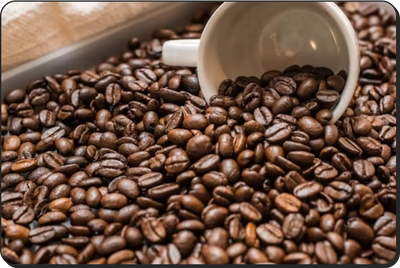 Arabica Coffee
The morning base
Arabica Coffee
The morning base
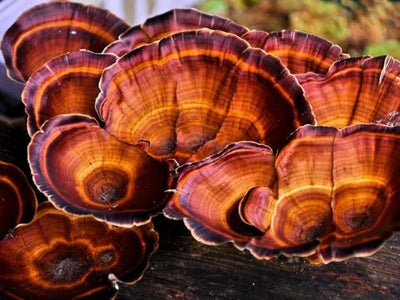 Reishi
Wind-down and calm
Reishi
Wind-down and calm
 Glycine
Deeper sleep
Glycine
Deeper sleep
 Magnesium Glycinate
Physical tension
Magnesium Glycinate
Physical tension
 Vitamin B6
Your own melatonin pathway
Vitamin B6
Your own melatonin pathway
 Dutched Cocoa
The night ritual
Dutched Cocoa
The night ritual