

Collagen is the most abundant protein in the human body, found in skin, bones, cartilage, muscles and tendons. Collagen peptides are small, easily digestible pieces of collagen protein derived from animal or fish sources through a process called hydrolysis.
Hydrolysis is what makes them useful in a drink. It leaves the peptides highly bioavailable, meaning the body can absorb and use them without expending energy breaking them down first, and food-derived collagen peptides have been detected directly in human blood after oral ingestion[8]. Habituel includes collagen peptides in Mushroom Enhanced Coffee+.
1 Description and habitat
Collagen is a triple-helix protein and the structural scaffolding of the body: it holds skin, cartilage, tendon and bone matrix together. Intact collagen is far too large to absorb, which is why supplements use hydrolysed collagen instead, broken enzymatically into short peptide chains. Those chains are small enough to cross the intestinal wall, and researchers have identified them circulating in human blood after ingestion[8], a result an independent laboratory replicated across gelatin hydrolysates from several different sources[25]. Because every third amino acid in collagen is glycine, collagen peptides are also a meaningful glycine source.
2 What it is made of
Collagen has been part of human diets for as long as people have cooked whole animals. Bone broth, simmered for hours to dissolve connective tissue, is essentially a traditional collagen extract, and the same is true of gelatin, fish stock and slow-cooked cuts. Modern hydrolysis does deliberately what long cooking does slowly: break the protein into fragments the gut can absorb. What is new is the consistency, not the ingredient.
3 Research
Collagen peptides have an unusually large clinical literature for a supplement ingredient, including multiple randomised, placebo-controlled trials in people on skin, joint and bone measures[2][4][5][9]. The sections below set out what each body of work established, with every source cited and linked.
3.1 Skin elasticity and hydration
Collagen peptides improve skin elasticity, hydration and overall appearance[1][2]. The effect comes from stimulating the body's own collagen production, which reduces the appearance of wrinkles and fine lines and improves smoothness and firmness. Regular consumption significantly increases skin hydration and elasticity in controlled testing[2], and separate randomised trials have measured increases in dermal collagen density directly[6]. Those single trials are no longer the strongest thing on offer. Independent systematic reviews and meta-analyses now confirm the effect holds across studies rather than resting on any one of them, pooling improvements in elasticity, hydration and wrinkle depth[13][15], and an umbrella review of those meta-analyses reaches the same conclusion for skin and musculoskeletal outcomes[14]. Three further randomised trials point the same way[18][21][24]. One is worth naming on its own: a 12-week double-blind trial that found significant gains in hydration, elasticity and wrinkling declared no industry funding and no conflict of interest[17].
3.2 Joint comfort and mobility
The body's natural collagen production decreases with age, which contributes to joint discomfort and stiffness. Collagen peptides reduce joint discomfort and improve mobility by supporting cartilage[3][4], providing the building blocks cartilage uses for repair and maintenance. A 24-week study in athletes with activity-related joint pain measured significant improvement in joint function and reduced pain[3], and a separate trial found the same in adults with knee discomfort[7]. One trial went further than symptom scores and imaged the joint itself: using delayed gadolinium-enhanced MRI, it measured an increase in knee cartilage signal after collagen hydrolysate, the only objective structural endpoint in this literature[20].
3.3 Bone density
Collagen peptides contribute to bone density and strength[5]. The mechanism runs through the bone matrix, which is itself largely collagen: peptides stimulate the activity of osteoblasts, the cells responsible for bone formation, thereby enhancing density and strength. A randomised controlled study in postmenopausal women measured improved bone mineral density and favourable changes in bone turnover markers[5].
3.4 Other areas under study
Collagen peptides have also been studied for muscle adaptation alongside resistance training, where the high glycine content supports creatine synthesis[10], for hair and nail strength through keratin structure[11], for gut barrier integrity and tight junction proteins[12], and for arterial elasticity[9]. Recovery has its own set of trials. Collagen peptides taken alongside resistance training beat placebo plus training for fat-free mass and strength in older men with age-related muscle loss[19] and increased fat-free mass in untrained middle-aged men[23], and a separate randomised trial found reduced markers of exercise-induced muscle damage and inflammation[22]. A systematic review gathers the body-composition, collagen-synthesis and recovery evidence in one place[16]. Each of these areas has its own published literature, linked in full in the references section below.
4 Strength of the evidence
Not all evidence carries the same weight. This is what the research behind collagen peptides rests on.
- The skin, joint and bone findings come from randomised, placebo-controlled trials in people, not laboratory models.
- Absorption is not assumed. Food-derived collagen peptides have been identified circulating in human blood after oral ingestion.
- Several trials ran 24 weeks or longer, which is long enough to measure structural change rather than short-term fluctuation.
- Independent research groups replicate the same results across separate populations: athletes, postmenopausal women, older men with age-related muscle loss, untrained middle-aged men and adults with knee discomfort.
- The skin findings have been pooled by independent systematic reviews and meta-analyses, so they no longer rest on individual trials.
- Several of the trials cited here were funded by, or co-authored with, collagen manufacturers. Each one is flagged in the reference list rather than left for the reader to find.
5 Safety and interactions
Collagen peptides are a food-derived protein with a strong safety record, but a few considerations apply.
6 Sourcing, extraction and quality
Collagen products vary widely in how well the body can actually use them, and the differences are not visible on the front of a label. The terms below are the ones worth checking.
7 Use in Habituel formulas
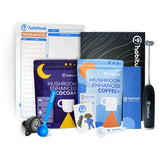
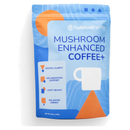
Habituel uses collagen peptides in Mushroom Enhanced Coffee+, alongside Lion's Mane, Chaga, Turkey Tail, L-Theanine and Arabica coffee. Coffee is a practical delivery vehicle: it is hot, it is a daily habit, and a properly hydrolysed peptide dissolves into it without affecting the taste. Exact quantities per serving are proprietary. Every ingredient is listed separately, so there is no proprietary blend hiding the ratio.
8 References
Last reviewed August 2026 · 25 references cited. This article is for information only. These statements have not been evaluated by the Food and Drug Administration. This product is not intended to diagnose, treat, cure, or prevent any disease.