
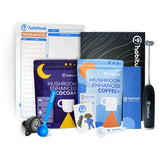
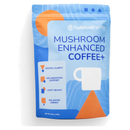


Arabica coffee (Coffea arabica) is one of the most popular coffee types in the world, renowned for its smooth flavour and aromatic qualities. It is known for a smooth, sweet taste with hints of fruit, sugar and berries, and a fragrant aroma often carrying floral or fruity notes[1].
The reason it is the base of Coffee+ is chemistry rather than preference. Arabica beans contain about 1.5% caffeine compared with roughly 2.7% in Robusta, and that lower caffeine load makes the cup smoother and less likely to cause anxiety and jitters[3]. Pairing that lighter cup with L-Theanine is the other half of the design: in a placebo-controlled trial the combination improved attention switching and alertness beyond caffeine alone, with theanine offsetting caffeine's jittery edge[2]. Habituel uses low-acid Colombian Arabica in Mushroom Enhanced Coffee+.
1 Description and habitat
Arabica is the older and more delicate of the two commercial coffee species, originating in the highlands of Ethiopia and now grown across equatorial highlands worldwide. It demands altitude, shade and consistent rainfall, which is why it costs more to produce than Robusta and why growing region shows up so clearly in the cup. Habituel sources Colombian Arabica specifically for its low acidity: a bean that stays smooth when it is the carrier for five other ingredients rather than the whole show.
2 Why Arabica, not Robusta
Two properties separate Arabica from Robusta and both matter in a functional coffee. The first is caffeine: at about 1.5% against Robusta's 2.7%, Arabica delivers a gentler lift, which makes it less likely to cause anxiety and jitters and a better fit for anyone sensitive to caffeine. The second is sugar. Arabica beans have a higher natural sugar content, which is what produces the sweetness and flavour complexity people recognise as good coffee[3]. Pairing a lower-caffeine bean with L-Theanine is the whole design of Coffee+. The combination has been tested directly against caffeine alone and improved attention switching and alertness while offsetting the jitters[2]: enough caffeine to work, not enough to cost you the afternoon.
3 Research
Coffee is among the most researched items in the human diet, with a literature spanning cognitive performance, antioxidant chemistry and large population studies[5][6][11][13]. The sections below set out what each body of work established, with every source cited and linked.
3.1 Mental alertness and cognitive performance
The caffeine in Arabica coffee stimulates the central nervous system, enhancing mental alertness and concentration[5]. The usual shorthand is that it raises dopamine and norepinephrine release; that is a reasonable reading of the pharmacology rather than a settled finding, and the better-evidenced statement is the dose one: low to moderate doses, roughly 40 to 300 mg, improve alertness, vigilance, attention and reaction time[16]. Reviews of caffeine as an attention enhancer confirm the effect on sustained attention specifically, which is the measure that matters most for a working morning[6]. The strongest single piece of evidence on this page is a 2025 meta-analysis of 31 randomised trials in 1,455 people: caffeine improved both attention accuracy and reaction time, and the gains scaled with dose[13]. Pairing it with L-Theanine improves attention switching and alertness beyond caffeine alone while blunting the jittery edge[2].
3.2 Antioxidants and chlorogenic acid
Arabica coffee is dense in antioxidants, which help counter oxidative stress in the body. Chief among them is chlorogenic acid. Its content has been quantified directly in Arabica coffees, both regular and decaffeinated, so this is measured chemistry rather than an inferred property[4], and a human pharmacokinetic study confirms chlorogenic acids are absorbed and reach measurable levels in blood[23]. A review of 94 studies reports consistent antioxidant and anti-inflammatory activity alongside favourable effects on glucose, lipids and endothelial function, which is where the support for vascular function actually comes from[19]. An eight-week randomised trial in adults with impaired glucose tolerance found chlorogenic acid improved glycaemic control against placebo[22]. The claim also holds at the level of the drinker rather than the compound: in a human intervention study, daily coffee reduced biomarkers of oxidative DNA damage in healthy volunteers[20].
3.3 A smoother cup by design
Lower caffeine is not a compromise, it is the point. The reduced caffeine level in Arabica makes it less likely to cause anxiety and jitters, which suits people sensitive to caffeine, and its higher natural sugar content carries the sweetness and complexity of the cup[3]. Green and roasted coffee have both been assessed for antioxidant and protective activity, confirming that roasting retains a meaningful share of the bean's chemistry[3]. The smoothness is not only a question of how much caffeine is in the bean. Adding L-Theanine changes how that caffeine lands: in a placebo-controlled trial the two together improved attention switching and alertness beyond caffeine alone, with theanine offsetting the jitteriness caffeine produces on its own[2].
3.4 Other areas under study
Coffee has one of the largest epidemiological literatures of any food, with population studies examining metabolic markers and insulin sensitivity[7], metabolic rate[8], liver enzyme levels[9][10], and cardiovascular and cerebrovascular measures[11][12]. These are large population studies of habitual coffee drinking. Two independent umbrella reviews now sit on top of that literature: one covering 201 meta-analyses found three to four cups a day associated with lower all-cause mortality and lower cardiovascular disease than not drinking coffee at all[14], and a separate synthesis concluded that moderate consumption is more likely to benefit than harm[15]. A large cohort study also reported around 20 per cent lower depression risk among regular caffeinated-coffee drinkers[21]. Each area has its own published literature, linked in full in the references section below.
4 Strength of the evidence
Not all evidence carries the same weight. This is what the research behind Arabica coffee rests on.
- Coffee is among the most studied items in the human diet, with decades of controlled trials and population data behind it.
- The caffeine content difference between Arabica and Robusta is measured chemistry, not a marketing distinction.
- Chlorogenic acid has been quantified directly in Arabica beans, so the antioxidant claim rests on analysis of the bean itself.
- The alertness findings come from controlled human testing and are among the most reliably replicated results in nutrition science.
- The attention finding has been pooled across 31 randomised trials, and the population evidence summarised by two independent umbrella reviews, rather than resting on selected studies.
- The caffeine and L-Theanine pairing that defines Coffee+ has been tested head to head against caffeine alone in a placebo-controlled trial.
5 Safety and interactions
Coffee is a food with a long safety record, but caffeine is an active compound and a few considerations apply. The European Food Safety Authority concluded that single doses up to 200 mg, and habitual intakes up to 400 mg a day, raise no safety concern for healthy adults[17], and a review of the wider literature found moderate intake is not associated with adverse cardiovascular, bone or reproductive effects[18]. Pregnancy is the exception both single out, and it is covered below.
6 Sourcing, extraction and quality
Coffee quality is decided long before the cup, by species, altitude, processing and roast. The terms below are the ones worth checking on any label.
7 Use in Habituel formulas
Habituel uses low-acid Colombian Arabica as the base of Mushroom Enhanced Coffee+, alongside Lion's Mane, Chaga, Turkey Tail, L-Theanine and collagen peptides. The bean was chosen for what it does not do as much as what it does: lower caffeine and low acidity leave room for the other five ingredients to work, and pairing it with L-Theanine is what produces focus without the jitters, a combination tested directly against caffeine alone[2]. Every ingredient is listed separately, so there is no proprietary blend hiding the ratio.
8 References
Last reviewed August 2026 · 23 references cited. This article is for information only. These statements have not been evaluated by the Food and Drug Administration. This product is not intended to diagnose, treat, cure, or prevent any disease.
9 See also
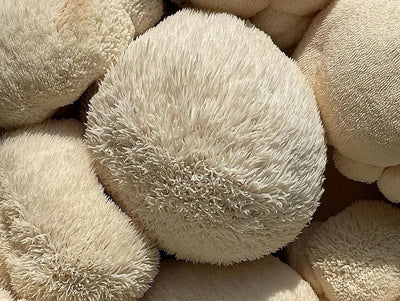 Lion's Mane
Focus and memory
Lion's Mane
Focus and memory
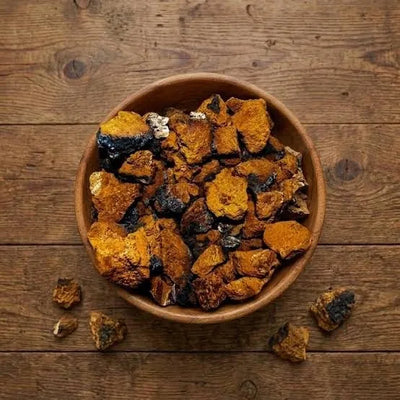 Chaga
Antioxidant density
Chaga
Antioxidant density
 Turkey Tail
Immune and gut support
Turkey Tail
Immune and gut support
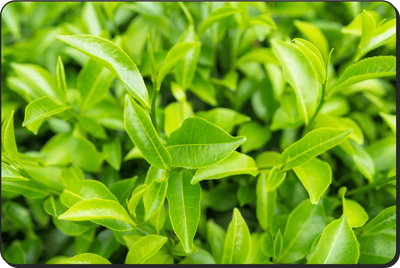 L-Theanine
Calm focus
L-Theanine
Calm focus
 Collagen Peptides
Joints, skin, recovery
Collagen Peptides
Joints, skin, recovery
 Reishi
Wind-down and calm
Reishi
Wind-down and calm
 Glycine
Deeper sleep
Glycine
Deeper sleep
 Magnesium Glycinate
Physical tension
Magnesium Glycinate
Physical tension
 Vitamin B6
Your own melatonin pathway
Vitamin B6
Your own melatonin pathway
 Dutched Cocoa
The night ritual
Dutched Cocoa
The night ritual