


Reishi (Ganoderma lucidum) is a glossy, fan-shaped fungus that grows on hardwood trees in warm, humid climates. Known as Lingzhi in China, it has been prized in East Asian herbal traditions for centuries, not as food but as a tonic, because its woody texture suits teas and extracts better than the dinner plate[1].
Modern research focuses on two families of compounds, triterpenes and polysaccharides, which are behind most of Reishi's studied effects[1]. Sleep is where the research is most interesting: Reishi extract increases total sleep time and non-REM sleep, the deep, restorative kind[2]. Habituel includes dual-extracted Reishi in Mushroom Enhanced Cocoa+.
1 Description and habitat
Reishi grows as a hard, kidney-shaped bracket with a lacquered red-brown surface that looks almost varnished, which is where lucidum, meaning shining, comes from. It fruits on decaying hardwood in warm, humid forests across Asia and, increasingly, on cultivated logs. Its texture is corky rather than fleshy, which is why it has always been prepared as a decoction or extract rather than eaten. Both compound families matter and they are not extracted the same way: the polysaccharides are water-soluble while the triterpenes require alcohol[1].
2 Traditional use
For over two thousand years, traditional medicine in China and Japan has turned to Reishi above all other mushrooms for calm and balance, earning it the name mushroom of immortality[1]. It was classified as a superior tonic, meaning something taken continuously to maintain health rather than acutely to treat illness. That framing matches what the modern literature describes as immunomodulation, and it is why Reishi has held its place as a long-term tonic rather than a quick fix.
3 Research
Reishi has one of the longest research trails of any functional mushroom, including a randomised, double-blind, placebo-controlled trial in adults and mechanistic work identifying the pathways involved[2][3][5]. The sections below set out what each body of work established, with every source cited and linked.
3.1 Deeper, longer sleep
Reishi is the evening mushroom, and sleep is where its research is most interesting. Reishi extract increases total sleep time and non-REM sleep, the deep, restorative kind[2]. Part of this effect runs through GABA, the brain's main calming signal: Reishi extract promotes sleep through GABAergic pathways in controlled experiments[3]. More recent work shows the gut is involved too, with Reishi promoting sleep through a microbiota-dependent pathway involving serotonin, which suggests its calming effect begins in the digestive system[4]. In animal research, Reishi spore extract restored REM and non-REM sleep and raised the activity of GABAergic neurons in the brainstem region that gates sleep[11].
3.2 Fatigue and a calmer baseline
Feeling wired but tired is exactly the state Reishi has been studied for. In an eight-week randomised, double-blind trial, adults with neurasthenia, meaning persistent fatigue with irritability and poor sleep, reported significantly less fatigue and better overall well-being on Reishi polysaccharide extract compared with placebo[5]. A separate clinical trial found Reishi spore powder reduced fatigue, anxiety and depression scores and improved quality of life in patients dealing with treatment-related exhaustion[6]. Both point the same direction: Reishi helps most when the body's stress load is high. In mice, Reishi extracts have shown antidepressant-like activity in standard behavioural tests[13].
3.3 Immune modulation
Reishi's polysaccharides, particularly its beta-glucans, interact with immune cells rather than simply stimulating them. In a clinical study, a Reishi polysaccharide extract enhanced immune responses including natural killer cell activity in patients whose immune systems were under severe strain[7]. The same pattern now has healthy-adult data behind it: in a randomised, placebo-controlled trial in 135 healthy volunteers, twelve weeks of Reishi beta-glucan raised natural killer cell activity by more than 80 per cent, alongside higher T-cell counts and IgA, with no safety signal[8]. Reviews of Reishi's pharmacology describe this as immunomodulation: helping immune cells respond appropriately rather than pushing them into overdrive[1].
3.4 Antioxidant support
Reishi's triterpenes and polysaccharides carry antioxidant activity, helping protect cells from the oxidative stress that accumulates with age, poor sleep and daily strain[1]. Antioxidants matter because free radicals damage cells over time, contributing to ageing and chronic disease. A 2025 meta-analysis of seventeen randomised trials found that Reishi supplementation raised glutathione peroxidase activity, one of the body's own antioxidant enzymes[9]. Reishi's antioxidant compounds are one reason researchers keep returning to this mushroom when studying healthy ageing[1].
4 Strength of the evidence
Not all evidence carries the same weight. This is what the research behind Reishi rests on.
- The fatigue finding comes from an eight-week randomised, double-blind, placebo-controlled trial, the strongest study design available for this kind of question.
- The sleep mechanism has been traced to two specific pathways, GABAergic signalling and a gut microbiota route, rather than left as an unexplained effect.
- Reishi has one of the longest research trails of any functional mushroom, with independent groups working on the same compound families.
- Over two thousand years of documented continuous use gives the modern work an unusually long safety record to build on.
5 Safety and interactions
Reishi is well tolerated by most people, and a 2025 review classes it as AHPA Class 1, citing a sixteen-week human trial at three grams a day with no significant adverse effects[10]. There are still a few things worth knowing before adding it to a routine, and the medication cautions below have a mechanism behind them: Reishi's triterpenes inhibit several cytochrome P450 enzymes, the liver system that clears many common drugs[12].
6 Sourcing, extraction and quality
Not all Reishi products deliver what the research studied. Because its two active compound families need different solvents, extraction method matters more with Reishi than with almost any other mushroom.
7 Use in Habituel formulas
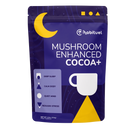
Habituel uses dual-extracted Reishi in Mushroom Enhanced Cocoa+, alongside Glycine, Magnesium Glycinate, Vitamin B6 and Dutched cocoa. It is included at the level used in the research described above rather than a token amount added for the label. Exact quantities per serving are proprietary. Cocoa+ is melatonin-free, and every ingredient is listed separately, so there is no proprietary blend hiding the ratio.
8 References
Last reviewed August 2026 · 13 references cited. This article is for information only. These statements have not been evaluated by the Food and Drug Administration. This product is not intended to diagnose, treat, cure, or prevent any disease.
9 See also
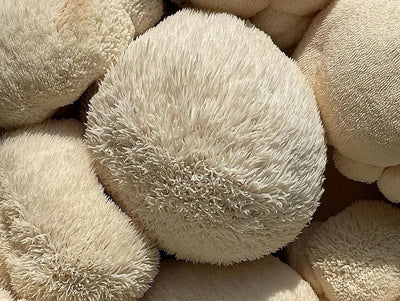 Lion's Mane
Focus and memory
Lion's Mane
Focus and memory
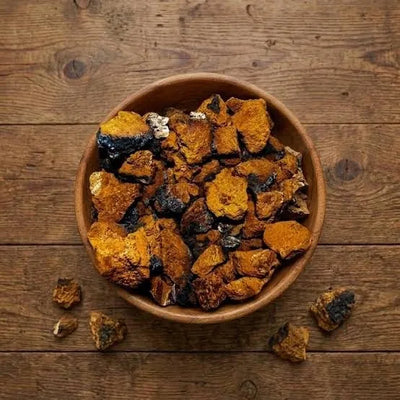 Chaga
Antioxidant density
Chaga
Antioxidant density
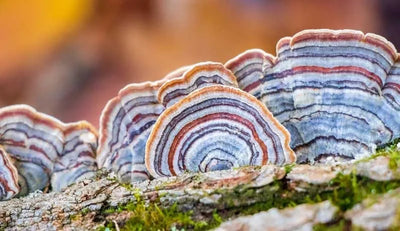 Turkey Tail
Immune and gut support
Turkey Tail
Immune and gut support
 L-Theanine
Calm focus
L-Theanine
Calm focus
 Collagen Peptides
Joints, skin, recovery
Collagen Peptides
Joints, skin, recovery
 Arabica Coffee
The morning base
Arabica Coffee
The morning base
 Glycine
Deeper sleep
Glycine
Deeper sleep
 Magnesium Glycinate
Physical tension
Magnesium Glycinate
Physical tension
 Vitamin B6
Your own melatonin pathway
Vitamin B6
Your own melatonin pathway
 Dutched Cocoa
The night ritual
Dutched Cocoa
The night ritual