


Tight shoulders, restless legs, a mind that will not power down: physical tension has a way of following you to bed. Magnesium is one of the body's essential relaxation minerals, and it is also one of the most common shortfalls in the modern diet.
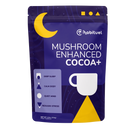
The catch is that the form you take makes all the difference. Magnesium glycinate is magnesium bound to glycine, the same calming amino acid studied for sleep. This chelated form is gentle on the stomach and well absorbed, unlike cheaper forms such as magnesium oxide, which are poorly absorbed and often used as laxatives. Habituel includes magnesium as glycinate in Mushroom Enhanced Cocoa+.
1 Description and habitat
Magnesium is a mineral the body needs for more than 300 enzyme reactions, from muscle and nerve function to energy production and sleep regulation[1]. It occurs naturally in pumpkin seeds, leafy greens, nuts and whole grains, yet many adults fall short of the recommended intake[1][14]. In a cross-sectional study of more than 20,000 adults, a higher magnesium deficiency score was associated, in graded fashion, with more trouble sleeping[10]. In supplement form magnesium is always paired with a carrier molecule, and that pairing determines how much actually reaches the bloodstream. Chelation to glycine buffers the mineral through digestion, which is what separates glycinate from the oxide and citrate forms that dominate the shelf.
2 Why the glycinate form
Magnesium supplements are not created equal. Common forms such as magnesium oxide and citrate are known above all for their laxative effect, which is a sign of poor absorption rather than potency. A systematic review of magnesium supplement bioavailability found inorganic forms such as oxide less well absorbed than organic and chelated ones[11]. Glycinate is different: the magnesium is chelated to glycine, which carries it through digestion for high absorption without the bathroom surprises. A controlled crossover comparison in patients with ileal resection measured 23.5 per cent absorption from magnesium diglycinate against 11.8 per cent from oxide[12]. There is a bonus, and it is not incidental. The glycine half of the molecule is itself a studied sleep supporter[6], which makes magnesium glycinate a two-for-one evening mineral rather than simply a gentler version of the same thing.
3 Research
Magnesium's evening reputation is backed by human trials, including double-blind placebo-controlled work on insomnia and an EEG study measuring sleep architecture directly[2][3]. The sections below set out what each body of work established, with every source cited and linked.
3.1 Falling asleep faster and staying asleep
In a double-blind, placebo-controlled trial of older adults with insomnia, daily magnesium supplementation improved sleep efficiency, shortened the time it took to fall asleep, and reduced early-morning waking[2]. A meta-analysis of oral magnesium trials in older adults put the reduction in time to fall asleep at about seventeen minutes against placebo[8]. An earlier EEG study found that oral magnesium reversed age-related changes in sleep patterns, increasing slow-wave sleep, the deep stage that leaves you feeling restored, while lowering evening cortisol[3]. The most directly relevant trial is also the newest: in 155 healthy adults aged 18 to 65 who reported poor sleep, four weeks of magnesium bisglycinate, the same form used here, reduced insomnia severity significantly against placebo[7]. Magnesium's role here is structural: it supports GABA activity, the same calming brain signal targeted by many sleep aids, but through a mineral the body actually requires[13].
3.2 Stress and a steadier mood
A systematic review of 18 studies found magnesium supplementation associated with reduced subjective anxiety in people prone to stress[4]. The mineral sits at the junction of the nervous system's excitation and relaxation signals, which is why running low can feel like being stuck in the on position. Mood benefits too: in a randomised clinical trial, six weeks of magnesium supplementation led to clinically significant improvements in mood and anxiety measures in adults, with effects appearing within two weeks[5].
3.3 Releasing physical tension
Magnesium is essential for normal muscle function: it is the mineral that lets muscle fibres relax after calcium tells them to contract[1]. That is why low magnesium is classically linked to cramps, twitches and the carried-in-the-shoulders kind of tension. Keeping magnesium topped up supports the physical side of winding down: looser muscles, a calmer nervous system, and a body that is actually ready for rest. Recovery belongs in the same picture: a systematic review of magnesium supplementation across different types of physical activity found reduced muscle soreness and better recovery and performance[9].
4 Strength of the evidence
Not all evidence carries the same weight. This is what the research behind magnesium glycinate rests on.
- The sleep findings come from a double-blind, placebo-controlled trial in people, not a laboratory model.
- Sleep architecture was measured by EEG, so the slow-wave sleep finding is objective rather than self-reported.
- The anxiety evidence is a systematic review of 18 studies, which carries more weight than any single trial.
- Magnesium is an essential mineral with an established physiological role, so the question is adequacy of intake rather than whether the mechanism exists.
- A 2025 randomised, placebo-controlled trial tested magnesium bisglycinate specifically, in healthy adults reporting poor sleep rather than in an elderly insomnia population, which is closer to how the ingredient is actually used.
5 Safety and interactions
Magnesium glycinate is one of the best-tolerated forms, but a few points are worth knowing.
6 Sourcing, extraction and quality
With magnesium, the label word that matters most is the form, and it is the one most often obscured. The terms below are the ones worth checking.
7 Use in Habituel formulas
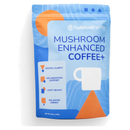
Mushroom Enhanced Cocoa+ delivers magnesium as gentle glycinate in a warm evening cup, alongside Glycine, Reishi, Vitamin B6 and Dutched cocoa. Because the carrier molecule is glycine, the same amino acid studied for sleep onset, the form was chosen for what it adds rather than only for what it avoids. Cocoa+ is melatonin-free, and every ingredient is listed separately, so there is no proprietary blend hiding the ratio.
8 References
Last reviewed August 2026 · 14 references cited. This article is for information only. These statements have not been evaluated by the Food and Drug Administration. This product is not intended to diagnose, treat, cure, or prevent any disease.
9 See also
 Lion's Mane
Focus and memory
Lion's Mane
Focus and memory
 Chaga
Antioxidant density
Chaga
Antioxidant density
 Turkey Tail
Immune and gut support
Turkey Tail
Immune and gut support
 L-Theanine
Calm focus
L-Theanine
Calm focus
 Collagen Peptides
Joints, skin, recovery
Collagen Peptides
Joints, skin, recovery
 Arabica Coffee
The morning base
Arabica Coffee
The morning base
 Reishi
Wind-down and calm
Reishi
Wind-down and calm
 Glycine
Deeper sleep
Glycine
Deeper sleep
 Vitamin B6
Your own melatonin pathway
Vitamin B6
Your own melatonin pathway
 Dutched Cocoa
The night ritual
Dutched Cocoa
The night ritual