

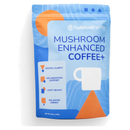
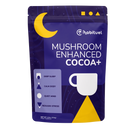


Cocoa has been called the food of the gods since the Aztecs, and modern research suggests they were onto something. Behind the comforting taste sits one of the most-studied plant foods in nutrition science, with clinical trials on mood, blood vessels, brain and gut.
Cocoa powder is made by fermenting, roasting and grinding cacao beans, then pressing out most of the fat. Dutching is an extra step, treating the cocoa with an alkalising agent, that mellows its natural bitterness and acidity and gives it a deeper, smoother flavour. Mushroom Enhanced Cocoa+ is built on real dutched cocoa.
1 Description and habitat
Cocoa begins as the seed of the cacao pod, fermented to develop flavour, roasted, then ground and pressed to remove most of the cocoa butter. What remains is cocoa powder: a concentrated source of flavanols and polyphenols with a naturally bitter, acidic edge. Dutching neutralises that edge with an alkalising agent, producing the deeper colour and smoother taste most people associate with drinking chocolate. Dutching also reduces some of cocoa's flavanol content compared with natural cocoa[5].
2 Why dutched, and the trade-off
Dutching costs some flavanols, and choosing it is a deliberate decision. What it buys is a cup smooth enough to drink unsweetened, every night, with cocoa's broader polyphenol package still on board[5]. Analysis of commercial powders puts a number on the cost: dutched cocoa retains roughly half its antioxidant capacity, still more than most foods in the average American diet[16]. The best habit is the one you actually keep: a natural-cocoa formula with a higher flavanol number on paper does no good if it is too bitter to finish without sugar. Sweetening an evening drink turns it into dessert, which defeats the purpose more thoroughly than a modest reduction in flavanols.
3 Research
Few everyday foods have cocoa's depth of clinical research, including a 42-trial meta-analysis on vascular function and randomised, placebo-controlled work on mood and the gut microbiome[1][2][4]. The sections below set out what each body of work established, with every source cited and linked.
3.1 Calmness and contentedness
That end-of-day cocoa ritual has science behind it. In a 30-day randomised, placebo-controlled trial, adults taking cocoa polyphenols rated themselves significantly calmer and more content than the placebo group[1]. Notably this was a trial of cocoa's polyphenols themselves, not sugar and not chocolate. The mood effect came from the plant, which is exactly what you want from an evening cup. A separate randomised trial found that acute cocoa flavanol intake reduced self-rated mental fatigue and improved performance during sustained mental effort[12].
3.2 Healthy blood flow
Cocoa's best-established benefit is vascular. A meta-analysis of 42 randomised trials found that cocoa and flavan-3-ol intake improved flow-mediated dilation, a direct measure of how well blood vessels relax, along with modest improvements in blood pressure and insulin resistance[2]. A Cochrane review pooling 20 randomised trials put the blood pressure effect at roughly 2 to 3 mmHg against control[6]. The mechanism runs through nitric oxide, the molecule blood vessels use to stay flexible, and a landmark trial isolated epicatechin, one of cocoa's flavanols, as the compound driving that nitric oxide response[7]. The largest cocoa flavanol trial ever run, COSMOS, followed more than 21,000 adults and recorded 27 per cent fewer cardiovascular deaths over the study period[8]. Healthy circulation is not only a heart story: it is also how oxygen and nutrients reach a recovering body overnight.
3.3 The ageing brain
In the CoCoA study, an eight-week randomised controlled trial in older adults, daily cocoa flavanol drinks improved cognitive performance, blood pressure control and metabolic markers[3]. A separate trial paired flavanol drinks with brain imaging: three months of high-flavanol cocoa improved function in the dentate gyrus, the part of the hippocampus most associated with age-related memory decline, and memory improved along with it in adults aged 50 to 69[9]. Researchers attribute these effects to the same vascular pathway: better blood flow means a better-supplied brain. Two further trials converge on that mechanism, finding improved neurovascular coupling after thirty days of cocoa[10] and an acute rise in regional cerebral blood flow after a single high-flavanol dose[11]. It is one more reason cocoa deserves its place as a daily habit rather than an occasional treat.
3.4 A friendlier gut
Gut bacteria respond to cocoa too. In a randomised, double-blind crossover trial, four weeks of cocoa flavanols significantly increased beneficial bifidobacteria and lactobacilli in healthy adults, a prebiotic effect, while reducing less friendly microbes[4]. The same study saw a drop in inflammatory markers alongside the microbial shift, which suggests the gut is one of the routes through which cocoa does the rest of its work.
4 Strength of the evidence
Not all evidence carries the same weight. This is what the research behind cocoa rests on.
- The vascular finding is a meta-analysis of 42 randomised trials, which is the strongest tier of evidence available for a food.
- The mood, brain and gut findings each come from randomised, placebo-controlled trials in people.
- The mood trial tested cocoa polyphenols specifically, so the result cannot be attributed to sugar or to the experience of eating chocolate.
- Flow-mediated dilation and gut microbiota composition are objective laboratory measures, not self-reported outcomes.
5 Safety and interactions
Cocoa is a food rather than a drug, but a few practical notes help you get the most from it.
6 Sourcing, extraction and quality
Most hot chocolate is sugar with a cocoa accent. To get what the research studied, the questions are about how much cocoa is actually in the cup and what else came with it.
7 Use in Habituel formulas
Mushroom Enhanced Cocoa+ is built on real dutched cocoa, enough to taste like hot chocolate rather than a flavoured supplement, alongside Glycine, Reishi, Magnesium Glycinate and Vitamin B6. It is unsweetened and melatonin-free. Cocoa is not a filler here: it is a clinically studied ingredient in its own right, and it is also what makes the rest of the formula something you look forward to. Every ingredient is listed separately, so there is no proprietary blend hiding the ratio.
8 References
Last reviewed August 2026 · 16 references cited. This article is for information only. These statements have not been evaluated by the Food and Drug Administration. This product is not intended to diagnose, treat, cure, or prevent any disease.
9 See also
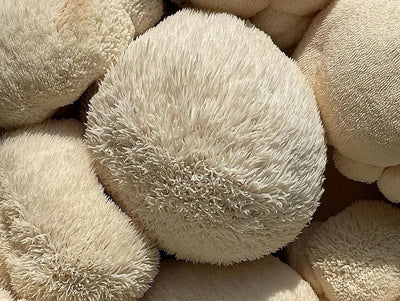 Lion's Mane
Focus and memory
Lion's Mane
Focus and memory
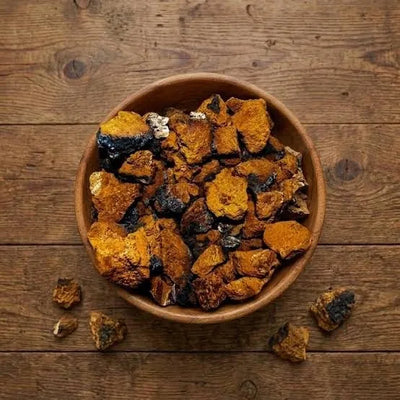 Chaga
Antioxidant density
Chaga
Antioxidant density
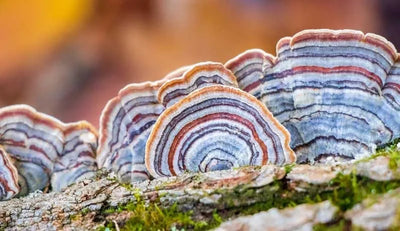 Turkey Tail
Immune and gut support
Turkey Tail
Immune and gut support
 L-Theanine
Calm focus
L-Theanine
Calm focus
 Collagen Peptides
Joints, skin, recovery
Collagen Peptides
Joints, skin, recovery
 Arabica Coffee
The morning base
Arabica Coffee
The morning base
 Reishi
Wind-down and calm
Reishi
Wind-down and calm
 Glycine
Deeper sleep
Glycine
Deeper sleep
 Magnesium Glycinate
Physical tension
Magnesium Glycinate
Physical tension
 Vitamin B6
Your own melatonin pathway
Vitamin B6
Your own melatonin pathway