
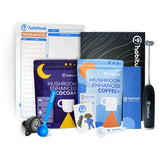


Glycine is the smallest amino acid in the human body, and one of the busiest. It is a building block of collagen, a key ingredient in glutathione, the body's master antioxidant, and a calming neurotransmitter in its own right[1][9].
Its sleep research stands out because it was done in humans, at doses you can actually take. In a placebo-controlled study using polysomnography, the gold standard of sleep measurement, glycine before bed improved sleep quality and shortened the time it took participants to fall asleep and reach deep, slow-wave sleep[2]. Habituel includes glycine in Mushroom Enhanced Cocoa+ at the level used in that research.
1 Description and habitat
Glycine is the simplest amino acid there is: a single carbon backbone with no side chain, which is why it fits into structural proteins where bulkier amino acids cannot. Every third amino acid in collagen is glycine[1]. The body produces some on its own and gets more from gelatin, meat and fish, but the amounts studied for sleep are hard to reach through diet alone, which is where supplementation comes in.
2 How it works
Glycine works with the body's own sleep physiology rather than against it. One of the physiological triggers for sleep onset is a drop in core body temperature, and glycine accelerates it: it acts on NMDA receptors in the suprachiasmatic nucleus, the brain's master clock, increasing blood flow to the skin and letting the body shed heat faster[4]. In other words glycine does not sedate you. It flips the same switch your body uses to start sleep naturally, which is why it leaves no groggy residue in the morning. A human safety study that gave volunteers nine grams, three times the amount used in the sleep trials, found no next-day sleepiness either[6].
3 Research
Glycine is that rare sleep support with real human trials behind it, including polysomnography-verified measurement and a sleep-restriction study on next-day performance[2][3][5]. The sections below set out what each body of work established, with every source cited and linked.
3.1 Falling asleep faster, sleeping deeper
In a placebo-controlled study using polysomnography, the gold standard of sleep measurement, glycine before bed improved subjective sleep quality and shortened the time it took participants to fall asleep and reach deep, slow-wave sleep[2]. An earlier study in people with ongoing sleep complaints found the same pattern: glycine before bed led to better-rated sleep and less daytime sleepiness the next day[3]. Unlike sedatives, glycine did not change total sleep architecture. It simply helped sleep start sooner and feel deeper.
3.2 The body temperature mechanism
Glycine's sleep effect has a specific, documented physiological route. It acts on NMDA receptors in the suprachiasmatic nucleus, the brain's master clock, increasing blood flow to the skin so the body sheds heat faster and core temperature falls[4][8]. Because that temperature drop is one of the body's own triggers for sleep onset, glycine accelerates a natural process rather than overriding it, which is why it produces no morning grogginess.
3.3 Better days after short nights
Even when sleep is cut short, glycine softens the blow. In a study of healthy volunteers restricted to about 5.5 hours of sleep, those taking glycine reported less daytime fatigue and performed better on reaction-time tests than those on placebo[5]. For anyone whose schedule does not always allow a full eight hours, that is a meaningful finding: glycine supported both the night itself and the day that followed.
3.4 Collagen and antioxidant defences
Sleep is only part of glycine's job description. Every third amino acid in collagen, the protein holding skin, joints and connective tissue together, is glycine[1]. Glycine is also one of the three amino acids the body uses to build glutathione, a central antioxidant that helps protect cells from oxidative stress. Reviews of glycine research describe wide-ranging supportive roles, from metabolic health to cellular protection[1]. Emerging human research also links glycine supplementation to improved liver and metabolic markers[7].
4 Strength of the evidence
Not all evidence carries the same weight. This is what the research behind glycine rests on.
- The sleep findings come from human trials, not animal models, at an amount you can realistically take.
- Sleep quality was verified by polysomnography, an objective laboratory measurement, rather than questionnaires alone.
- The mechanism is identified at the receptor level and tied to a known physiological trigger for sleep onset.
- Independent studies replicate the same pattern across healthy sleepers, people with sleep complaints, and sleep-restricted volunteers.
5 Safety and interactions
Glycine has an excellent safety record, since it is an amino acid the body produces every day, but a few notes are worth keeping in mind.
6 Sourcing, extraction and quality
Many products sprinkle in far less glycine than the human sleep research used, enough for the label and not enough for the effect. The terms below are the ones worth checking.
7 Use in Habituel formulas
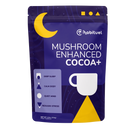
Mushroom Enhanced Cocoa+ delivers glycine at the level used in the research above, in a warm evening cup, alongside Reishi, Magnesium Glycinate, Vitamin B6 and Dutched cocoa. Cocoa+ is melatonin-free, and every ingredient is listed separately, so there is no proprietary blend hiding the ratio.
8 References
Last reviewed August 2026 · 9 references cited. This article is for information only. These statements have not been evaluated by the Food and Drug Administration. This product is not intended to diagnose, treat, cure, or prevent any disease.
9 See also
 Lion's Mane
Focus and memory
Lion's Mane
Focus and memory
 Chaga
Antioxidant density
Chaga
Antioxidant density
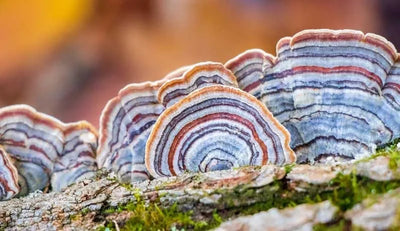 Turkey Tail
Immune and gut support
Turkey Tail
Immune and gut support
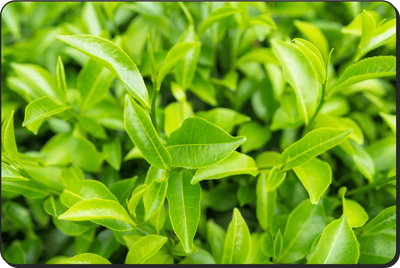 L-Theanine
Calm focus
L-Theanine
Calm focus
 Collagen Peptides
Joints, skin, recovery
Collagen Peptides
Joints, skin, recovery
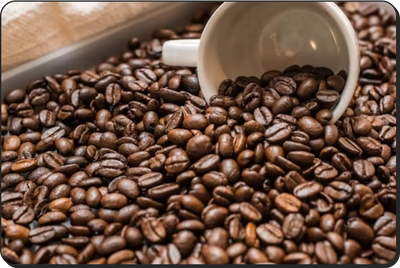 Arabica Coffee
The morning base
Arabica Coffee
The morning base
 Reishi
Wind-down and calm
Reishi
Wind-down and calm
 Magnesium Glycinate
Physical tension
Magnesium Glycinate
Physical tension
 Vitamin B6
Your own melatonin pathway
Vitamin B6
Your own melatonin pathway
 Dutched Cocoa
The night ritual
Dutched Cocoa
The night ritual