



Lion's Mane (Hericium erinaceus) is a unique type of fungus that grows on hardwood trees in cooler climates. It takes its name from its appearance: a white, fluffy cascade of spines resembling a lion's mane. For centuries it has been used in traditional medicine, especially in China and Japan.
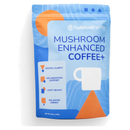
Modern interest centres on a group of compounds found in the mushroom that stimulate nerve growth factor (NGF), a protein essential for the growth and survival of neurons[2]. Most research into the mushroom's effects on memory, mood and nerve repair traces back to this mechanism[1][6]. Habituel includes Lion's Mane fruiting body extract in Mushroom Enhanced Coffee+.
1 Description and habitat
Lion's Mane grows as a single clump of downward-flowing spines rather than the cap-and-stem shape of most familiar mushrooms, which makes it hard to confuse with anything else. It fruits on hardwoods, typically beech and oak, in cooler climates across North America, Europe and Asia. The visible fruiting body is the part used in traditional preparation and the part most human research has examined[1]. The mycelium, the root-like network the mushroom grows from, contains a different compound profile and is often cultivated on grain, which is a distinction that matters when comparing supplements[3].
2 Traditional use
Lion's Mane has a long history in traditional Chinese and Japanese medicine, where it was consumed as food and as a tonic preparation. Records associate it with digestive complaints and general vitality rather than the cognitive framing common today[8]. In Japan it is known as Yamabushitake, a reference to the mountain-dwelling Shugendo monks whose garments the spines were said to resemble. The shift toward studying it for brain and nerve function is relatively recent, beginning in earnest with Japanese chemistry work in the late 1980s and early 1990s[2].
3 Research
Lion's Mane has been the subject of decades of published research, spanning controlled human trials, animal models and cell studies. The cognitive and mood findings are supported by placebo-controlled work in people[1][6], and the underlying mechanism has been characterised in the chemistry literature since 1991[2]. The sections below set out what each body of work established, with every source cited and linked.
3.1 Brain health and memory
Lion's Mane is best known for its association with brain function and memory. Research shows the mushroom can help produce nerve growth factor (NGF), a protein essential for the growth and survival of neurons[2]. NGF helps brain cells grow and stay healthy, and by increasing NGF, Lion's Mane may influence how the brain functions[3]. In a placebo-controlled trial, adults taking Lion's Mane scored measurably higher on cognitive testing than those on placebo, and memory performance improves on the same measures in animal models[1][3]. A separate 12-week trial found improved Mini-Mental State Examination scores against placebo, so the 2009 result is not a one-off[11]. Between them, the human trials now cover both adults with mild cognitive impairment and healthy adults. Newer human trials add to the picture: an eight-week trial reported improved processing speed and pattern recognition[12], and a single dose sped performance on a focus task within an hour[13]. The animal work is more consistent still, with Lion's Mane preventing amyloid-induced memory deficits in mice[16], improving recognition memory in healthy mice[17], and raising NGF maturation alongside hippocampal neurogenesis in an Alzheimer's model[15].
3.2 Nerve regeneration
Compounds in Lion's Mane may help nerve cells grow, which has led researchers to examine it in the context of nerve injury[4]. This ability is linked to the same effect on NGF production: NGF supports brain function and also plays a role in repairing damaged nerves[5]. Laboratory research indicates that extracts can accelerate the healing of nerve cells, and the mushroom has been studied as a candidate for conditions such as peripheral neuropathy[4][5]. In rats, an oral aqueous extract sped functional recovery and axon regeneration after a crush injury to the peroneal nerve, performing comparably to the drug used as a positive control[18]. That moves the finding out of the petri dish and into a living animal.
3.3 Mood, anxiety and depression
Lion's Mane may help reduce symptoms of anxiety and depression[6][7]. Its anti-inflammatory properties and its support of the nervous system both contribute: chronic inflammation is linked to depression and anxiety, so reducing inflammation influences mood[7]. The same NGF mechanism that supports neuron growth has also been identified as a contributor[2]. These effects have been measured directly in people over a four-week period[6]. A second human study found depression and anxiety scores fell substantially and sleep improved in 77 adults over eight weeks[14].
3.4 Other areas under study
Lion's Mane contains compounds with anti-inflammatory effects, and has been studied for immune function, protection of the stomach lining, growth of beneficial gut bacteria, and antioxidant activity against free radicals[8][9]. It has also been examined in relation to blood lipids, blood sugar, antimicrobial activity and cell behaviour[10]. Each of these areas has its own published literature, linked in full in the references section below.
4 Strength of the evidence
Not all evidence carries the same weight. This is what the research behind Lion's Mane rests on.
- The 2009 cognitive trial was double-blind and placebo-controlled, the strongest study design available for a question of this kind.
- The NGF mechanism was isolated and named in 1991 and has been reproduced by independent laboratories since.
- Benefits in the 2009 trial tracked with continued use, consistent with an active physiological mechanism rather than a one-off result.
- Independent human, animal and cell research converge on the same mechanism, so the case does not rest on a single study or a single method.
- The human evidence now spans adults with mild cognitive impairment and healthy adults rather than a single population.
5 Safety and interactions
Lion's Mane is generally well tolerated, but a few considerations apply before adding it to a daily routine. Animal toxicology reports no adverse effects at intakes far above anything a person would consume, with a no-observed-adverse-effect level above 3 g per kilogram of body weight per day in a 28-day rat feeding study[19].
6 Sourcing, extraction and quality
Two products can both list Lion's Mane and contain substantially different material. Quality depends on which part of the organism is used, how it is processed, and what else is in the container. The terms below are the ones worth checking on any label.
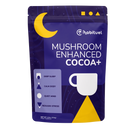
7 Use in Habituel formulas
Habituel uses Lion's Mane fruiting body extract in Mushroom Enhanced Coffee+, alongside Chaga, Turkey Tail, L-Theanine, collagen peptides and Arabica coffee. It is included at the level used in the research described above rather than a token amount added for the label. Exact quantities per serving are proprietary. Every ingredient is listed separately, so there is no proprietary blend hiding the ratio.
8 References
Last reviewed August 2026 · 19 references cited. This article is for information only. These statements have not been evaluated by the Food and Drug Administration. This product is not intended to diagnose, treat, cure, or prevent any disease.
9 See also
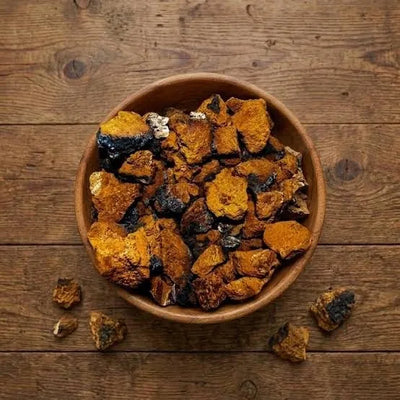 Chaga
Antioxidant density
Chaga
Antioxidant density
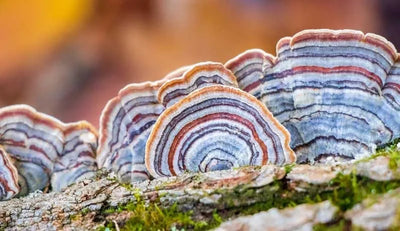 Turkey Tail
Immune and gut support
Turkey Tail
Immune and gut support
 L-Theanine
Calm focus
L-Theanine
Calm focus
 Collagen Peptides
Joints, skin, recovery
Collagen Peptides
Joints, skin, recovery
 Arabica Coffee
The morning base
Arabica Coffee
The morning base
 Reishi
Wind-down and calm
Reishi
Wind-down and calm
 Glycine
Deeper sleep
Glycine
Deeper sleep
 Magnesium Glycinate
Physical tension
Magnesium Glycinate
Physical tension
 Vitamin B6
Your own melatonin pathway
Vitamin B6
Your own melatonin pathway
 Dutched Cocoa
The night ritual
Dutched Cocoa
The night ritual