
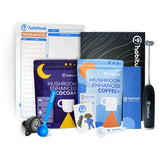


Turkey Tail (Trametes versicolor) is a colourful fungus that grows on dead hardwood trees in forests worldwide. Its name comes from its distinctive fan-shaped appearance, resembling a turkey's tail feathers. For centuries these mushrooms have been used in traditional Chinese medicine[1].
Modern research centres on two polysaccharopeptides isolated from the mushroom, PSP and PSK, which have been shown to act on the immune system[2][3]. PSK has been in clinical use in Japan for decades, making Turkey Tail one of the most thoroughly documented mushrooms in the functional category. Habituel includes Turkey Tail extract in Mushroom Enhanced Coffee+.
1 Description and habitat
Turkey Tail grows in overlapping rosettes of thin, leathery brackets, each banded in concentric rings of brown, tan, grey and blue. The colour varies enough between specimens that the species name versicolor means exactly that. It is a saprophyte, feeding on dead and decaying hardwood, and it is one of the most common fungi in temperate forests on every continent except Antarctica. The fruiting body is the part used in traditional preparation and the part from which PSP and PSK are extracted[1].
2 Traditional use
Turkey Tail is known as Yun Zhi in traditional Chinese medicine and Kawaratake in Japan, where it was prepared as a decoction and used as a strengthening tonic[1]. Its modern history is unusual among functional mushrooms: a purified extract of the mushroom, PSK, was approved as a prescription medicine in Japan in 1977 and has been prescribed there ever since. That regulatory history is why the Turkey Tail literature includes a larger share of clinical work than most mushrooms in this category.
3 Research
Turkey Tail has a research trail spanning immunology, the gut microbiome, antioxidant chemistry and clinical trials in people[1][5][7]. The sections below set out what each body of work established, with every source cited and linked.
3.1 Immune function
Turkey Tail is best documented for its effect on immune signalling. It contains the polysaccharopeptides PSP and PSK, which stimulate the immune system[2][3]. PSK acts as a TLR2 agonist and increases the activity of natural killer cells and CD8 T cells, the components most directly involved in identifying and clearing infected cells[4]. Beta-glucans are recognised by dectin-1 and by Toll-like receptors on immune cells, which is the general route through which fungal beta-glucans engage immune signalling[19][22]. The closest thing to a healthy-population trial ran for four months in 100 healthy adults and measured a raised CD4/CD8 ratio and higher interferon-gamma with no adverse liver or kidney findings, using capsules that combined Yun Zhi with Danshen[13]. A systematic review of 15 controlled human studies of oral glucans reached the same broad conclusion, that they are immunomodulatory and well tolerated[20][21].
3.2 Gut microbiome
Turkey Tail acts as a prebiotic, contributing to a healthy gut microbiome[6]. Its polysaccharides nourish beneficial gut bacteria, and a randomised clinical trial in healthy volunteers measured direct changes in microbiota composition after supplementation[5]. Separate laboratory work confirmed that Turkey Tail extract modifies human faecal microbiota composition[8]. A mouse study points at the mechanism, finding more butyrate-producing bacteria and higher short-chain fatty acid output after supplementation; it used polysaccharides from fermented mycelium rather than the fruiting-body extract this page argues for[23]. Given how much immune tissue sits in the gut, the immune and digestive findings are likely two views of the same mechanism.
3.3 Antioxidant activity
Turkey Tail is rich in antioxidants, which help protect cells from damage caused by free radicals[9]. Analysis of the fungus identified it as a source of antiradical agents, and its high antioxidant content helps reduce oxidative stress, the cumulative cellular damage associated with ageing and daily strain[9].
3.4 Other areas under study
Turkey Tail has also been examined for liver support and hepatoprotective activity[10], skin and photoageing measures[11], and in a body of clinical oncology research including phase 1 trials and systematic reviews[7][12]. The largest of those is a meta-analysis of 23 randomised trials covering 4,246 patients, which found lower mortality risk and higher CD3 and CD4 counts where Turkey Tail-derived products were given alongside cancer treatment[14]. That clinical work is conducted in specific patient populations under medical supervision and is not a reason to take a supplement. Laboratory work continues in other directions: PSP raised antiviral signalling in human T cells without cytotoxicity[24], extracts altered mediator release from the immune cells of older adults[26], and Coriolus extract acted as an adjuvant in a vaccination model[18]. A 2026 review covers the immune, antioxidant and prebiotic evidence together[25]. Each of these areas has its own published literature, linked in full in the references section below.
4 Strength of the evidence
Not all evidence carries the same weight. This is what the research behind Turkey Tail rests on.
- A purified Turkey Tail extract has been an approved prescription medicine in Japan since 1977, which is an unusually high bar for a mushroom-derived compound.
- The gut microbiome finding comes from a randomised clinical trial in healthy volunteers, not a laboratory model.
- PSP and PSK are isolated, named compounds with characterised mechanisms, so the research is not describing a vague whole-mushroom effect.
- Independent human, laboratory and clinical research converge on the same immune pathway, so the case does not rest on a single study or a single method.
- The strongest clinical evidence, a meta-analysis of 23 randomised trials in 4,246 patients, comes from oncology settings where the extract was given alongside medical treatment. It is not evidence about general wellness and is not presented as such here.
- The one randomised trial in healthy adults tested Yun Zhi combined with Danshen rather than Turkey Tail alone, which limits what can be attributed to the mushroom by itself.
5 Safety and interactions
Turkey Tail is well tolerated by most people, but a few considerations apply before adding it to a routine. The toxicology is unusually well quantified for a mushroom: a 90-day rat study set a no-observed-adverse-effect level of 7.5 g per kilogram of body weight and derived an acceptable daily intake for humans of roughly 4.5 g[15], a standardised water extract was tolerated at every dose tested[17], and a 2025 assessment of commercial Turkey Tail powder found no acute, subchronic or genotoxic effects up to 2,000 mg per kilogram per day[16]. They bracket normal intake by a wide margin.
6 Sourcing, extraction and quality
Two products can both list Turkey Tail and contain substantially different material. Quality depends on which part of the organism is used, how it is processed, and what else is in the container. The terms below are the ones worth checking on any label.
7 Use in Habituel formulas
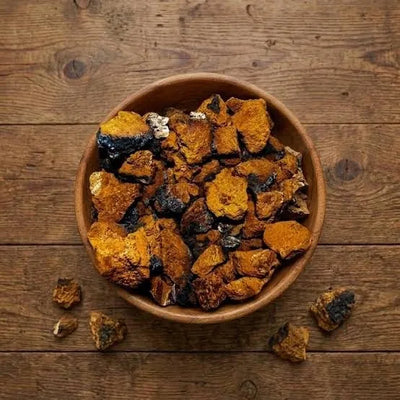
Habituel uses Turkey Tail fruiting body extract in Mushroom Enhanced Coffee+, alongside Lion's Mane, Chaga, L-Theanine, collagen peptides and Arabica coffee. It is included at the level used in the research described above rather than a token amount added for the label. Exact quantities per serving are proprietary. Every ingredient is listed separately, so there is no proprietary blend hiding the ratio.
8 References
Last reviewed August 2026 · 26 references cited. This article is for information only. These statements have not been evaluated by the Food and Drug Administration. This product is not intended to diagnose, treat, cure, or prevent any disease.
9 See also
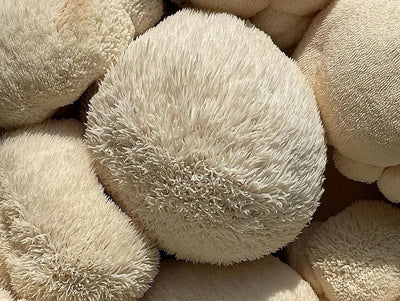 Lion's Mane
Focus and memory
Lion's Mane
Focus and memory
 Chaga
Antioxidant density
Chaga
Antioxidant density
 L-Theanine
Calm focus
L-Theanine
Calm focus
 Collagen Peptides
Joints, skin, recovery
Collagen Peptides
Joints, skin, recovery
 Arabica Coffee
The morning base
Arabica Coffee
The morning base
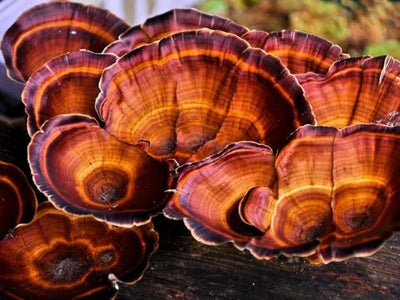 Reishi
Wind-down and calm
Reishi
Wind-down and calm
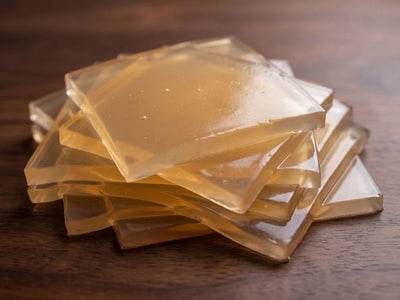 Glycine
Deeper sleep
Glycine
Deeper sleep
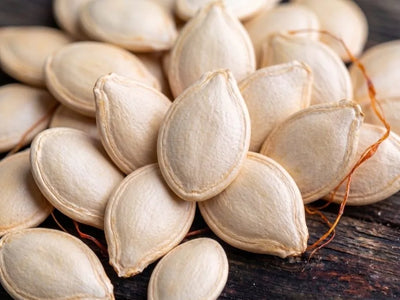 Magnesium Glycinate
Physical tension
Magnesium Glycinate
Physical tension
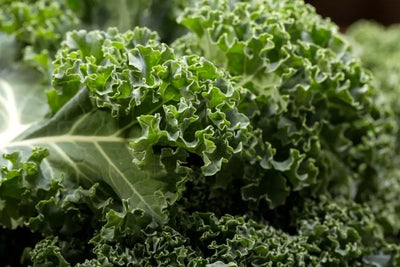 Vitamin B6
Your own melatonin pathway
Vitamin B6
Your own melatonin pathway
 Dutched Cocoa
The night ritual
Dutched Cocoa
The night ritual