

Most sleep supplements try to do the work for you. Vitamin B6 takes a different approach: it helps your body run its own sleep chemistry. This unassuming vitamin sits at the centre of the pathway your brain uses to make serotonin and, from it, melatonin.
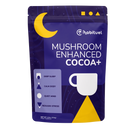
Vitamin B6 (pyridoxine) is a water-soluble vitamin found in foods like kale, chickpeas, bananas and fish. Its active form, pyridoxal 5'-phosphate, is a cofactor in well over 100 enzyme reactions, by some counts 150 or more, including the ones that build serotonin, dopamine and GABA[1][8]. Habituel includes Vitamin B6 in Mushroom Enhanced Cocoa+, which is why Cocoa+ is melatonin-free.
1 Description and habitat
Vitamin B6 is not one molecule but a family of six related compounds, all of which the body converts into the same active form: pyridoxal 5'-phosphate, or PLP. PLP is a cofactor, meaning it does not act on the body directly but enables enzymes to do their work, and it enables more of them than almost any other vitamin[1]. Because B6 is water-soluble, the body does not stockpile it and needs a steady daily supply, which is what makes it a natural fit for a nightly habit rather than an occasional one.
2 How it works
The logic of B6 in an evening formula is upstream rather than downstream. Your brain makes melatonin, the hormone of darkness, from serotonin, and it makes serotonin from the amino acid tryptophan. Vitamin B6, as PLP, is the required cofactor for the enzyme that performs that conversion[1]. Instead of dosing melatonin from outside, B6 supports the machinery your body uses to produce its own, on its own schedule. No grogginess and no dependence, just the raw materials for your natural rhythm.
3 Research
B6 research spans biochemistry and randomised, placebo-controlled trials in people, including work on dream recall and anxiety[2][3]. The sections below set out what each body of work established, with every source cited and linked.
3.1 Supporting your body's own melatonin pathway
The tryptophan to serotonin to melatonin pathway is the route by which the body signals night. PLP is the required cofactor for the enzyme that performs the key conversion in that chain[1]. This is the single reason B6 belongs in an evening cup: it supplies what the pathway needs to run rather than substituting for its end product, which is why Cocoa+ can be melatonin-free and non-habit-forming.
3.2 Richer dream recall
One of the more delightful findings in B6 research: in a randomised, placebo-controlled trial, taking vitamin B6 before bed significantly improved participants' ability to remember their dreams[2]. Dream recall is linked to the lighter stages of REM sleep and how we surface from them, so the finding is direct evidence that B6 is genuinely active in the sleeping brain rather than merely present in it.
3.3 A calmer, steadier mood
Because B6 helps produce GABA, the brain's main calming neurotransmitter, researchers have tested whether supplementing it changes how people feel[14]. In a month-long placebo-controlled trial, daily vitamin B6 reduced self-reported anxiety, with measurable changes consistent with increased GABA activity[3]. A later trial from the same group reported a reduction in depression symptoms[7]. Both used 100 milligrams a day, far above the amount in an evening cup, so they support the mechanism rather than the serving: the case for B6 here remains a sensible daily amount, not a clinical dose. B6 also has a long history in women's health: a systematic review in the BMJ found vitamin B6 helped relieve premenstrual symptoms, including mood-related ones[4]. Population studies point the same way without proving cause: higher B6 status is associated with better sleep duration and less daytime sleepiness, and higher B6 intake with lower odds of depression and anxiety in women[12][13].
3.4 Cellular repair and metabolism
Beyond the brain, B6 is a metabolic multitool. It helps the body break down and rebuild amino acids, release stored glucose for energy, and produce haemoglobin, the protein that carries oxygen in the blood[1]. Overnight is when much of the body's repair work happens, and B6 is a required part of that toolkit. It is a small vitamin with a long overnight shift.
4 Strength of the evidence
Not all evidence carries the same weight. This is what the research behind Vitamin B6 rests on.
- The dream recall and anxiety findings both come from randomised, placebo-controlled trials in people.
- The melatonin pathway role is established biochemistry, not an inferred effect. B6 is a required cofactor, which is a matter of enzymology.
- The anxiety trial paired self-reported measures with a visual test tied to GABA activity, so the result has an objective correlate.
- A BMJ systematic review adds decades of clinical use to the modern trial evidence.
5 Safety and interactions
Vitamin B6 is safe at everyday amounts, but dose is the detail that matters most with this one.
6 Sourcing, extraction and quality
With B6, more is not better. This is the one ingredient in either formula where the right answer is a modest amount taken consistently rather than the largest number on the shelf.
7 Use in Habituel formulas
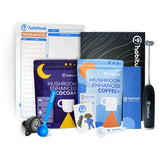
Mushroom Enhanced Cocoa+ includes Vitamin B6 to support your body's own melatonin pathway, which is the reason Cocoa+ is melatonin-free and non-habit-forming, alongside Glycine, Reishi, Magnesium Glycinate and Dutched cocoa. One warm cup before bed. Every ingredient is listed separately, so there is no proprietary blend hiding the ratio.
8 References
Last reviewed August 2026 · 14 references cited. This article is for information only. These statements have not been evaluated by the Food and Drug Administration. This product is not intended to diagnose, treat, cure, or prevent any disease.